
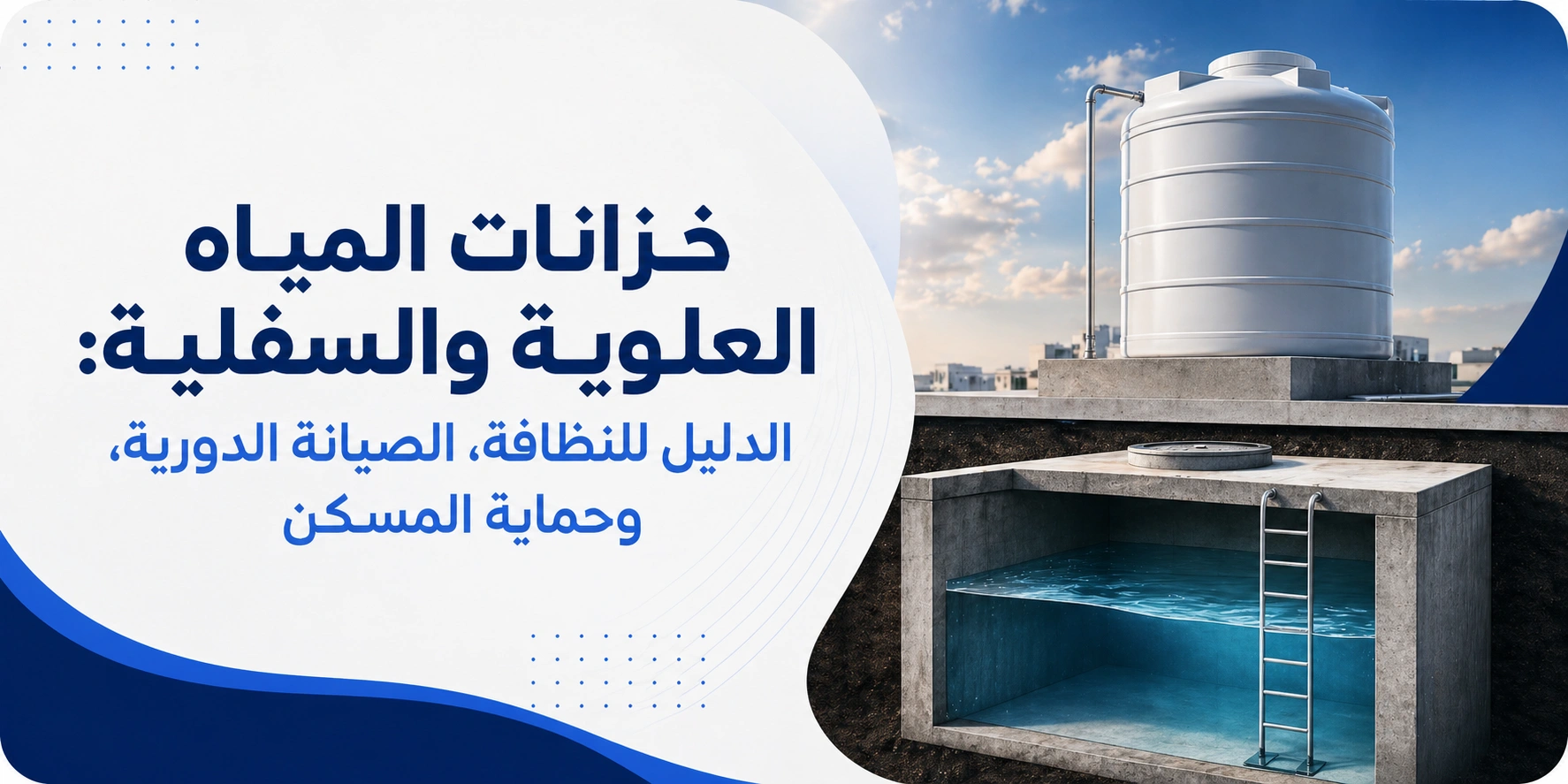
خزانات المياه العلوية والسفلية: الدليل للنظافة، الصيانة الدورية، وحماية المسكن
تعتبر خزانات المياه هي "المحرك الخفي" في كل منزل؛ فهي المسؤولة عن تأمين احتياجات العائلة اليومية من مياه الشرب، الطبخ، والنظافة. ومع ذلك، وبسبب وجودها في أماكن غير مرئية (تحت الأرض أو فوق السطح)، فإنها غالباً ما تتعرض للإهمال حتى تقع المشكلة، سواء كانت تلوثاً في المياه أو تسربات تهدد سلامة البناء.
في منصة سقف، نؤمن بأن الصيانة الوقائية للخزانات هي استثمار ذكي يحمي صحتك وميزانيتك.
أولاً: الخزان الأرضي (السفلي)
الخزان السفلي هو المستودع الأكبر، وبسبب موقعه تحت الأرض، يتطلب عناية لمنع اختلاط مياه البلدية بأي ملوثات خارجية.
1. العزل المائي (الداخلي والخارجي)
لا يقتصر العزل على منع خروج الماء من الخزان، بل يهدف أيضاً لمنع دخول "المياه الجوفية" أو مياه الصرف -لا قدر الله- إلى داخل الخزان.
النصيحة:
عند بناء أو ترميم الخزان، يجب التأكد من استخدام مواد عزل غير سامة (Epoxy) ومعتمدة للاستخدام البشري، لضمان عدم تفاعل المادة مع الماء.
2. فحص الهيكل الإنشائي
مع مرور السنوات، قد تحدث تشققات بسيطة في جدران الخزان الأرضي بسبب حركة التربة. هذه التشققات هي السبب الأول في "الفواتير المرتفعة".
الإجراء:
إذا لاحظت نقصاً غير طبيعي في منسوب المياه، فمن الضروري طلب خدمة فحص عبر منصة سقف للكشف عن الشروخ وإصلاحها قبل أن تؤثر على أساسات المنزل.
3. الغطاء (الفتحة الرئيسية)
يجب أن يكون غطاء الخزان مصنوعاً من مواد مقاومة للصدأ (مثل الألمنيوم الثقيل أو الحديد المجلفن) ومزوداً بإطار يمنع تسرب مياه الأمطار والأتربة والحشرات إلى الداخل.
ثانياً: الخزان العلوي – ضمان الضغط والنقاء
الخزان العلوي هو الذي يزود الصنابير بالمياه عبر الجاذبية أو مضخات الضغط، وهو الأكثر عرضة للحرارة.
1. مكافحة الطحالب والحرارة
أشعة الشمس المباشرة على الخزانات (خاصة البلاستيكية) تخلق بيئة مثالية لنمو الطحالب الخضراء.
الحل:
يفضل طلاء الخزانات بألوان فاتحة عاكسة للحرارة، أو استخدام "الأغطية العازلة" والتي تقلل حرارة المياه وتمنع نفاذ الضوء المحفز لنمو الطحالب.
2. صيانة العوامة ومواسير التهوية
العوامة:
هي المسؤول الأول عن هدر المياه؛ تعطلها يؤدي لفيضان الماء المستمر على السطح، مما قد يسبب تآكل الطبقة العازلة للسطح نفسه.
ثالثاً: مراحل التنظيف والتعقيم (خطة العمل)
لا يجب انتظار ظهور رائحة أو تغير في لون الماء للبدء بالتنظيف. إليك الجدول الزمني المثالي:
التفريغ والتنظيف اليدوي (كل 6-12 شهر):
يتم إفراغ الخزان وترك نسبة بسيطة من الماء لتحريك الرواسب والأتربة المتراكمة في القاع، ثم يتم سحبها بالكامل وتجفيف القاع.غسيل الجدران:
استخدام فرشاة قاسية مع منظفات آمنة لإزالة أي ترسبات على الجدران الداخلية.التعقيم:
بعد التنظيف، يتم ملء الخزان وإضافة مواد تعقيم (مثل هيبوكلوريت الصوديوم) بنسب دقيقة جداً تضمن التخلص من البكتيريا دون التأثير على سلامة الاستخدام البشري.شطف الشبكة:
بعد تنظيف الخزان، يُنصح بفتح جميع صنابير المنزل لعدة دقائق للتأكد من خروج أي رواسب كانت عالقة في المواسير الداخلية.
كيف تضمن "سقف" سلامة مياهك وبيتك؟
أعمال الخزانات دقيقة، وأي خطأ فيها قد يكلفك الكثير. منصة سقف توفر لك الحماية الكاملة عبر:
الكشف عن التسربات:
نربطك بفنيين لتحديد مكان التهريب في الخزان الأرضي دون الحاجة للتكسير العشوائي.مقاولين عزل معتمدين:
لضمان تنفيذ طبقات العزل وفق الأصول الهندسية (سواء العزل الأسمنتي أو الإيبوكسي).المحفظة الرقمية:
ميزة سقف الجوهرية؛ لا يتم تسليم المقاول مستحقاته إلا بعد إجراء "اختبار الغمر" للخزان لمدة 48 ساعة للتأكد من عدم وجود أي نقص في المياه، مما يضمن لك جودة التنفيذ 100%.التوثيق التقني:
استلام تقارير صور وفيديو لمراحل تنظيف وعزل الخزان، لتكون مطمئناً على جودة العمل الذي تم تحت الأرض أو فوق السطح.
الخلاصة
خزان المياه النظيف يعني عائلة صحية وبيتاً آمناً من أخطار التسربات.
اجعل صيانة الخزانات جزءاً من جدولك السنوي، واترك لـ سقف مهمة تزويدك بالمحترفين الذين يضمنون لك راحة البال.