
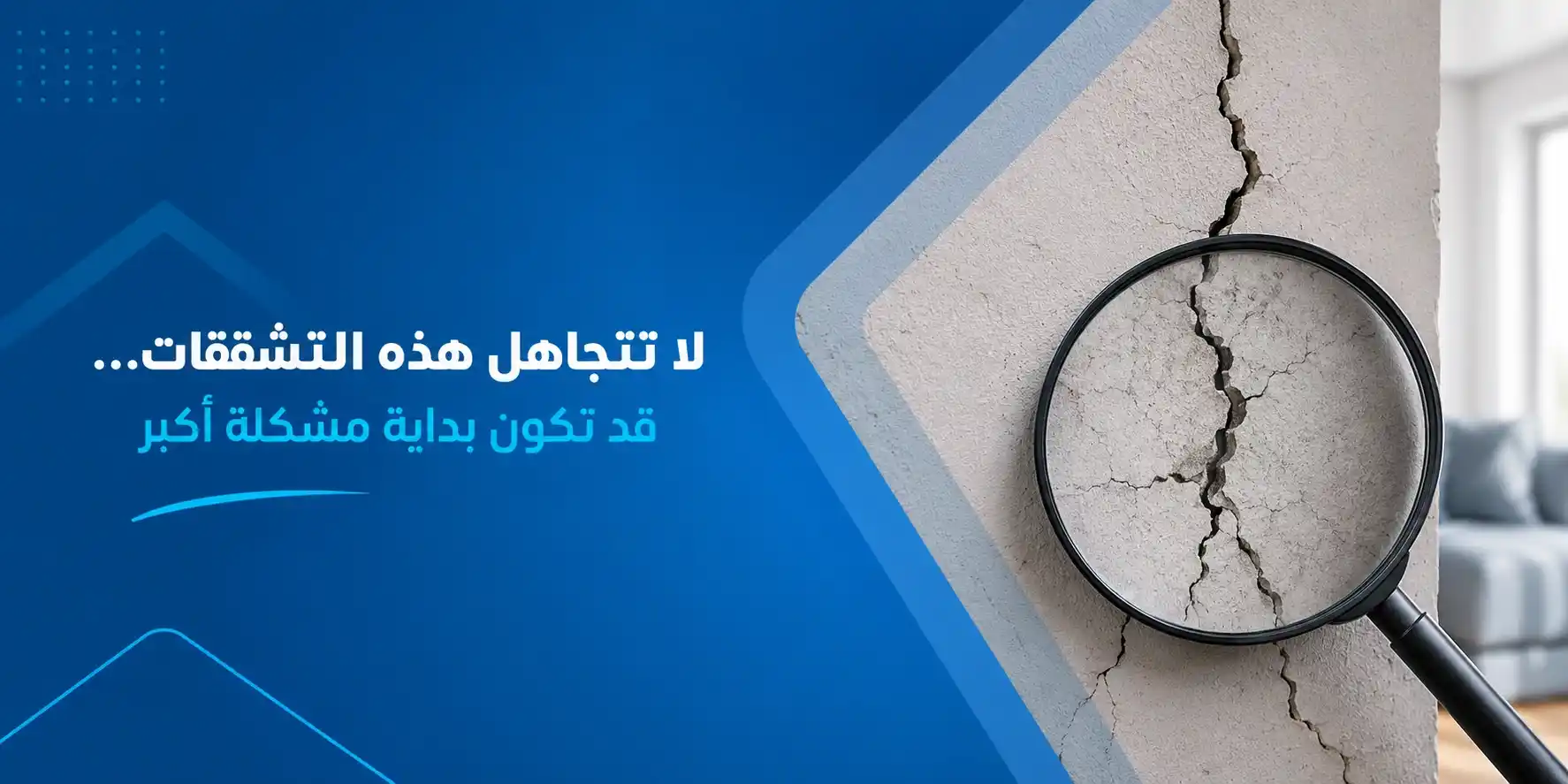
في البداية، تبدو كخط رفيع على الجدار…
تفصيل صغير يمكن تجاهله، أو تغطيته بطبقة دهان سريعة.
لكن ما لا ينتبه له كثيرون:
بعض التشققات لا "تظهر" فقط… بل "تكشف" ما يحدث خلف الجدران.
التشققات ليست كلها متشابهة، ولا تُعامل بنفس الطريقة.
هناك فرق كبير بين شق سطحي ناتج عن تشطيب، وآخر قد يكون بداية لمشكلة إنشائية حقيقية.
المشكلة أن أغلب الناس يتعاملون مع النتيجة، وليس مع السبب.
أولاً: كيف تقرأ التشققات؟ (لغة الجدران)
كل تشقق يحمل رسالة… إذا عرفت كيف تقرأها:
• تشققات شعرية دقيقة:
تظهر غالباً في الدهان أو المعجون، وهي سطحية ولا تشكل خطراً، لكنها مؤشر على جودة التشطيب.
• تشققات مستقيمة (أفقية أو عمودية):
غالباً مرتبطة بتمدد أو انكماش طبيعي في المواد، خصوصاً مع تغير درجات الحرارة.
• تشققات مائلة أو متعرجة:
هنا يبدأ القلق… هذا النوع غالباً يشير إلى حركة في الأساسات أو هبوط غير متساوٍ.
• تشققات تتسع مع الوقت:
إذا لاحظت أن الشق يكبر، فهذه ليست حالة مستقرة، بل مشكلة مستمرة.
وفي كثير من الحالات، يكون السبب مرتبطاً بمشاكل أخرى مثل الرطوبة في الجدران أو تسرب المياه، مما يزيد من تعقيد الوضع.
ثانياً: الأسباب الحقيقية خلف التشققات
التشققات ليست المشكلة بحد ذاتها… بل نتيجة:
حركة التربة والأساسات
أي تغير في استقرار التربة ينعكس مباشرة على الجدران.التمدد والانكماش الحراري
المواد تتمدد وتنكمش مع الحرارة، وإذا لم يتم أخذ ذلك بالحسبان أثناء التنفيذ، تظهر التشققات.ضعف جودة التنفيذ
مواد غير مناسبة أو تنفيذ غير دقيق يؤدي إلى تشققات مبكرة.تأثير الرطوبة والتسربات
الماء يضعف تماسك المواد مع الوقت، مما يجعلها أكثر عرضة للتشقق.
(يمكنك الاطلاع على مقال تسربات المياه: العدو الخفي داخل منزلك لفهم العلاقة بشكل أعمق).
ثالثاً: متى تكون التشققات خطيرة فعلاً؟
ليست كل التشققات مقلقة… لكن هذه الحالات تستدعي التدخل:
• إذا كان الشق عميقاً ويتجاوز طبقة الدهان
• إذا كان يتسع مع الوقت
• إذا ظهر بشكل مائل أو غير منتظم
• إذا كان قريباً من عناصر إنشائية مثل الأعمدة
• إذا ترافق مع تغير في استقامة الجدار أو الأبواب
هنا لا نتحدث عن مشكلة شكلية… بل عن احتمال خلل يجب تقييمه بشكل مهني.
رابعاً: لماذا تفشل أغلب محاولات الإصلاح؟
الحل السريع غالباً يكون:
• معجون
• دهان
• تغطية مؤقتة
لكن النتيجة؟
يختفي الشق… ثم يعود.
لأن ما تم إصلاحه هو "السطح"، بينما السبب الحقيقي ما زال موجوداً.
خامساً: ما هو التصرف الصحيح؟
التعامل الصحيح مع التشققات لا يبدأ بالإصلاح… بل بالتشخيص:
تحديد نوع التشقق وسببه
تقييم مدى خطورته
اختيار طريقة المعالجة المناسبة
تنفيذ الإصلاح بمواد وتقنيات مناسبة
وهنا تأتي المشكلة الحقيقية:
كيف تصل إلى الجهة المناسبة التي تفهم الفرق بين هذه الحالات؟
دور "سقف" في حل المشكلة
بدلاً من الاعتماد على اجتهادات فردية أو عمالة غير متخصصة،
توفر لك منصة سقف طريقة أكثر أماناً ووضوحاً:
• الوصول إلى شركات ومقاولين متخصصين في الترميم والعزل
• مقارنة العروض والخبرات قبل اتخاذ القرار
• اختيار الجهة المناسبة حسب نوع المشكلة
• متابعة التنفيذ بشكل منظم
سقف لا تقوم بالإصلاح بنفسها، لكنها تختصر عليك أهم خطوة:
الوصول إلى الشخص الصحيح الذي يفهم المشكلة من أساسها.
سادساً: كيف تقلل من ظهور التشققات مستقبلاً؟
• اختيار مقاولين مؤهلين من البداية
• التأكد من جودة المواد المستخدمة
• تنفيذ العزل بشكل صحيح
• معالجة أي رطوبة أو تسرب فور ظهوره
الخلاصة
تشققات الجدران ليست مجرد خطوط على الحائط… بل إشارات.
بعضها بسيط ويمكن تجاهله، وبعضها الآخر بداية لمشكلة أكبر.
الفرق لا يُعرف بالعين فقط… بل بالخبرة.
والخطوة الأهم ليست إصلاح الشق…
بل الوصول إلى الجهة المناسبة التي تعرف كيف تتعامل معه.
وهذا ما تسهّله لك منصة سقف.