
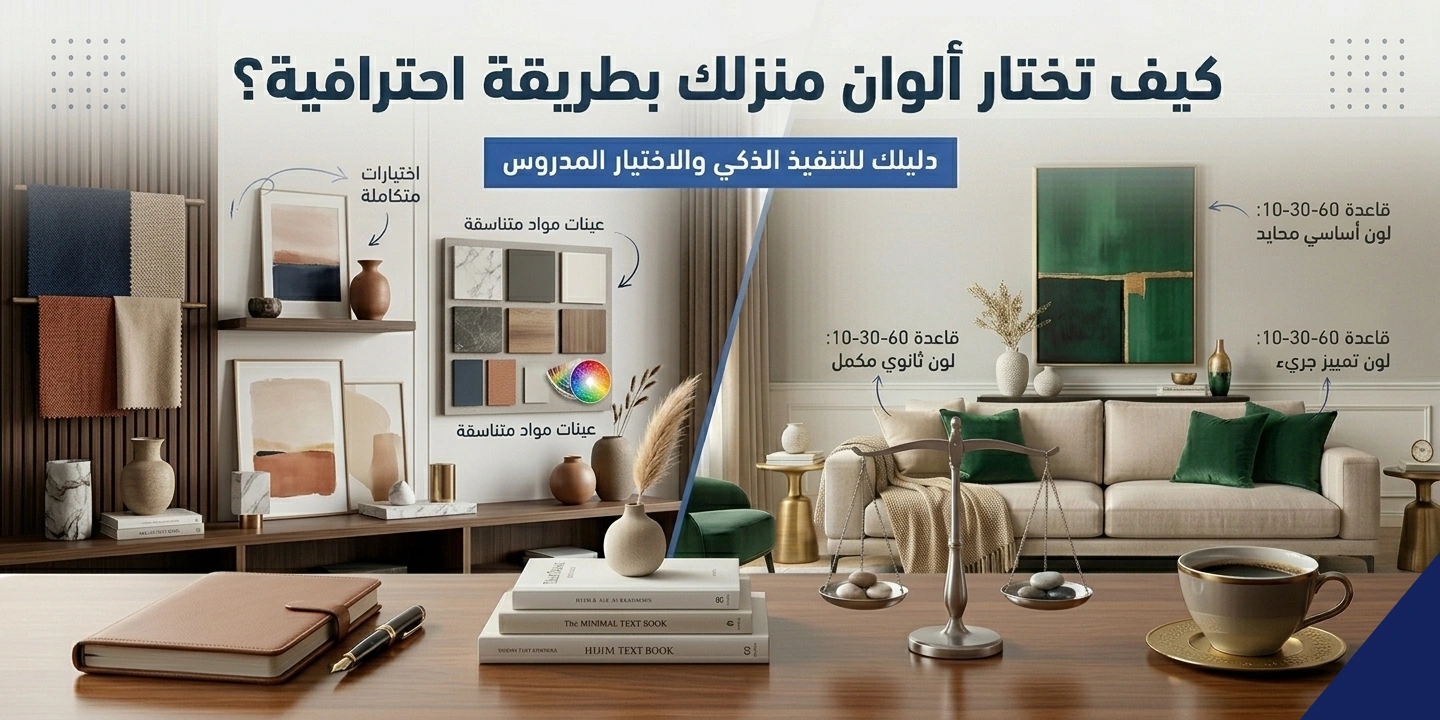
يعتبر اختيار ألوان الدهانات من اللحظات المحيرة عند ترميم البيت أو تجهيز السكن الجديد. فاللون ليس مجرد صبغة على الجدار، بل هو العنصر الذي يحدد "شخصية" الفراغ، ويؤثر بشكل مباشر على حالتنا النفسية، ومستوى الإضاءة، وحتى شعورنا باتساع المساحة من ضيقها.
في منصة سقف، ندرك أن التنفيذ الاحترافي يبدأ من الاختيار الذكي. نقدم لك نصائح تساعدك في إختيار الوان دهانات بيتك:
1. القاعدة الذهبية للتوازن (60-30-10)
لضمان عدم تضارب الألوان وظهور الغرفة بشكل متناسق ومريح للعين، ينصح باتباع قاعدة النسب المئوية:
60% اللون الأساسي (المهيمن): وهو اللون الذي يغطي المساحات الكبيرة كالجدران الرئيسية. يفضل دائماً أن يكون من الألوان المحايدة (مثل الأوف وايت، الكريمي، أو الرمادي الفاتح) ليعطي شعوراً بالاتساع والهدوء.
30% اللون الثانوي: يستخدم في قطع الأثاث الكبيرة، الستائر، أو جدار واحد (Accent Wall). يجب أن يكون مكملاً للون الأساسي ليخلق نوعاً من التباين.
10% لون التمييز (Accent Color): هنا تبرز جرأتك! يستخدم هذا اللون في التفاصيل الصغيرة مثل الوسائد، اللوحات الفنية، أو التحف. هذا اللون هو الذي يعطي الغرفة "هويتها" الخاصة.
2. قاعدة الـ (70-20-10) - البديل الهادئ
هذه القاعدة تشبه القاعدة الذهبية ولكنها تميل أكثر للهدوء والبساطة، وهي مثالية للبيوت التي تتبع النمط "المودرن" أو "المينيماليزم".
70% لون أساسي: عادة ما يكون لوناً محايداً فاتحاً جداً (مثل الأبيض الناصع أو الرمادي الثلجي) للجدران والأسقف.
20% لون مكمل: يستخدم في الأرضيات والستائر، ويكون من نفس عائلة اللون الأساسي ولكن بدرجة أغمق قليلاً.
10% لون تباين: لمسة بسيطة جداً تظهر في الإطارات أو مقابض الأبواب أو الإضاءة، وغالباً ما تكون ألواناً معدنية (ذهبي، فضي، أو أسود مطفي).
النتيجة: بيت يبدو واسعاً جداً ومنظماً بصرياً، وهي قاعدة آمنة تماماً من أي انتقادات فنية.
3. اعتمد مبدأ "التدرج اللوني" في الغرفة الواحدة
بدلاً من خلط ألوان كثيرة قد تسبب تشتتاً بصرياً، جرب استخدام درجات مختلفة من "نفس اللون".
مثال: إذا اخترت اللون الرمادي للجدران، يمكنك اختيار درجات أغمق قليلاً للسجاد أو الستائر. هذا التدرج يعطي فخامة وهدوءاً للمكان ويضمن التناسق التام.
4. تجربة العينة الميدانية (أهم خطوة)
دائماً ما ننصح في "سقف" بعدم الاعتماد الكلي على الكتالوج الورقي.
الخطوة الصحيحة: اطلب من المقاول دهان مساحة صغيرة تجريبية على الجدار الفعلي. رؤية اللون على مساحة واقعية وفي بيئة غرفتك الحقيقية هي الطريقة الوحيدة التي تضمن لك أن هذا هو اللون الذي تريده بالضبط قبل البدء في كامل البيت.
5. تنسيق ألوان الأرضيات مع الجدران
عند التخطيط للدهانات، لا تنسَ النظر إلى لون الأرضيات (سيراميك، رخام، أو باركيه).
القاعدة العامة هي خلق نوع من التوازن؛ فإذا كانت الأرضيات داكنة، يفضل أن تكون الجدران فاتحة جداً لتعويض الإضاءة، والعكس صحيح، وذلك لخلق تناغم بصري يريح العين.
كيف تضمن منصة "سقف" نجاح أعمال الدهانات في منزلك؟
اختيارك للون هو البداية، والتنفيذ المتقن هو ما يحافظ على هذا الجمال. نحن في منصة سقف نوفر لك الأدوات التي تضمن جودة النتيجة النهائية:
مقاولون متخصصون:نوصلك بالفنيين والمقاولين الذين يمتلكون المهارة في تأسيس الجدران من المعجون والصنفرة و ضرب الاساس الجدران بشكل احترافي، وهو ما يجعل اللون يظهر بنعومة وتناسق.
المحفظة الرقمية: ميزتنا المالية تضمن لك الالتزام بالمواصفات؛ حيث يتم تقسيم الدفعات بناءً على مراحل العمل (تأسيس، وجه أول، وجه نهائي)، ولا يتم تحويل المبالغ إلا بعد استلامك لكل مرحلة ومطابقتها لاختيارك.
تقارير فحص الجودة: يتأكدون من أن الجدران مهيأة تماماً للدهان، وخالية من العيوب الإنشائية أو الرطوبة التي قد تؤثر على جودة وثبات الألوان مستقبلاً.
الخلاصة: اختيار ألوان البيت هو تعبير عن ذوقك الخاص. بالتركيز على الألوان الهادئة، وتجربة العينات قبل التنفيذ، والاعتماد على مقاولين عبر سقف، ستضمن الحصول على سكن بأقل مجهود وأعلى جودة.